Logistics vs Supply Chain Management: Key Differences Explained Simply
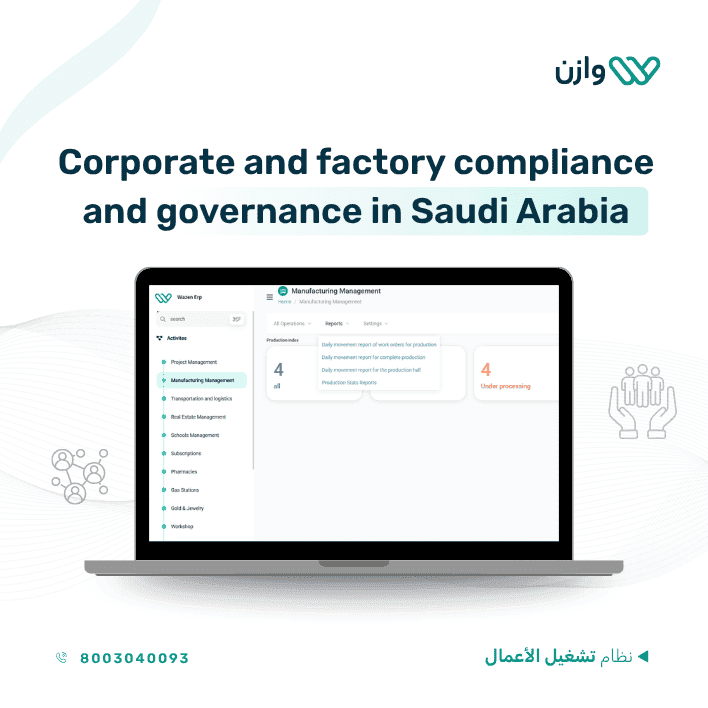
Corporate and factory compliance and governance in Saudi Arabia represents the cornerstone of ensuring business sustainability and achieving secure growth in an economic environment characterized by competitiveness and continuous development. This is especially true with the acceleration of legislation and the increasing regulatory requirements. Organizations are now required to adopt effective governance systems that enhance transparency and accountability while ensuring commitment to local and international regulations. The role of compliance is not limited to avoiding risks and penalties; it extends to improving operational efficiency, building a strong market reputation, and bolstering investor and customer confidence, making its implementation a strategic necessity rather than a complementary choice.
What is the Meaning of Corporate and Factory Compliance and Governance in Saudi Arabia?🔗
The concept of corporate and factory compliance and governance in Saudi Arabia refers to the commitment of institutions to implement the laws and regulations approved within the Kingdom, alongside adopting an organized administrative framework that ensures transparency, accountability, and sound resource management.
This approach aims to regulate the decision-making mechanism within companies and factories and organize the relationship between management and stakeholders to achieve a balance between profit-making and adherence to legal and ethical standards. Furthermore, corporate and factory compliance and governance in Saudi Arabia is an essential element for enhancing business stability and reducing risks, as it contributes to improving operational efficiency and raising the level of trust among investors and customers, in addition to protecting institutions from fines and violations. This concept also supports the building of a professional work environment based on clarity and discipline, helping companies achieve sustainable growth and keep pace with economic developments in the Saudi market.
What are the Pillars of Corporate and Factory Compliance and Governance in Saudi Arabia?🔗
Corporate and factory compliance and governance in Saudi Arabia relies on a set of integrated regulatory pillars aimed at controlling institutional performance, enhancing transparency, and ensuring full compliance with regulations. This is reflected in business stability and the achievement of sustainable growth in an advanced competitive environment. These pillars are as follows:
- Compliance with Systems and Legislation: Includes adherence to all laws and regulations issued by regulatory authorities within the Kingdom and following continuous updates to ensure no violations or fines occur.
- Transparency and Disclosure: Relies on providing accurate and clear financial and administrative reports that reflect the true performance of the institution, thereby enhancing trust among investors and stakeholders.
- Defining Authorities and Responsibilities: Involves establishing a clear organizational structure that precisely defines roles, preventing task overlap and contributing to the efficiency of work and decision-making.
- Effective Risk Management: Based on identifying potential risks, analyzing them, and developing proactive plans to deal with them, whether operational, financial, or legal.
- Internal Control and Auditing: Includes establishing precise control systems that monitor daily operations, ensure adherence to internal policies, and detect any imbalance early.
- Commitment to Ethical Standards: Based on consolidating the values of integrity and credibility in all dealings, whether within the institution or with customers and partners.
- Improving Operational Efficiency: Aims to develop procedures and processes to achieve the highest productivity at the lowest possible cost while maintaining performance quality. In modern industrial contexts, this involves understanding the nuances of logistics vs supply chain to ensure that every part of the operation is governed by clear standards.
- Enhancing Institutional Sustainability: Focuses on achieving a balance between economic growth and social and environmental responsibility to ensure long-term business continuity.
How Does Compliance Contribute to Reducing Risks and Financial Penalties?🔗
The application of corporate and factory compliance and governance in Saudi Arabia contributes directly to protecting institutions from exposure to legal risks and financial losses. This is achieved by building an integrated control system that ensures adherence to systems and regulations and supports making studied decisions that reduce the likelihood of errors or violations. This is done as follows:
- Strict Commitment to Legislation: Compliance ensures the tracking and precise application of all laws and regulations, reducing the probability of exposure to fines or legal penalties.
- Early Detection of Violations: Through internal control systems and continuous auditing, any transgressions are monitored in their early stages before turning into major crises.
- Reducing Operational Errors: Organizing procedures and unifying policies helps limit human errors that could lead to financial or legal losses.
- Effective Risk Management: Compliance relies on risk analysis and the development of preventive plans to deal with them, reducing their impact on the institution's stability.
- Raising Awareness Within the Institution: Spreading a culture of commitment among employees helps reduce non-compliant or undisciplined behaviors.
- Improving the Quality of Financial Reports: Ensures the accuracy of financial data, preventing manipulation or errors that might expose the company to legal accountability.
- Avoiding Cumulative Penalties: Continuous commitment prevents the repetition of violations, thus protecting the company from doubling fines over time.
- Protecting Institutional Reputation: Companies that apply corporate and factory compliance and governance in Saudi Arabia maintain their image in the market, reducing indirect losses resulting from a loss of trust.
The Role of Digital Transformation in Supporting Corporate Governance and Compliance🔗
Digital transformation contributes to creating a qualitative leap in the application of corporate and factory compliance and governance in Saudi Arabia by providing smart systems that enable institutions to manage their operations with higher efficiency, enhance transparency, and control procedures according to precise standards. This reduces human errors and raises the level of compliance with regulatory requirements.
Digital transformation relies on a set of tools and techniques that support governance and institutional compliance, most notably:
- Automation of Processes and Procedures: Contributes to reducing human intervention and ensuring tasks are executed according to specific policies without deviation.
- Electronic Control Systems: Allow for real-time performance monitoring and the detection of any transgressions or violations as they occur.
- Data Analysis and Decision Making: Provides accurate reports that support management in making strategic decisions based on reliable information.
- Digital Risk Management: Helps identify and analyze potential risks using advanced tools, making it easier to develop effective preventive plans. Within complex manufacturing environments, understanding the difference between logistics and supply chain management through digital tools allows for better governance of the entire value chain.
- Enhancing Transparency and Disclosure: Through digital reporting systems that ensure data accuracy and ease of access by relevant parties.
- Data Protection and Cybersecurity: Ensures the safety of sensitive information, which is an essential element in achieving compliance with modern standards.
- Improving Internal Communication: Digital platforms facilitate the exchange of information between departments, supporting coordination and reducing organizational errors.
By adopting digital transformation, institutions can achieve an advanced level of efficiency and control, making the application of corporate and factory compliance and governance in Saudi Arabia more accurate and flexible.
How the Wazen System Supports Corporate and Factory Compliance and Governance in Saudi Arabia🔗
The Wazen system contributes to enhancing corporate and factory compliance and governance in Saudi Arabia by providing integrated digital solutions that help organize administrative and financial operations with high precision. This ensures commitment to the regulations and systems approved within the Kingdom and raises the level of transparency and efficiency within the work environment.
The role of the Wazen system relies on a set of tools that directly support governance and compliance, including:
- Organizing Operational Processes: Works to unify procedures within the company or factory, reducing randomness and ensuring commitment to internal policies.
- Accurate Management of Financial Reports: Provides precise real-time reports that help monitor financial performance and detect any deviations early.
- Enhancing Internal Control: Allows for comprehensive monitoring of all operations, supporting the detection of errors or violations before they escalate.
- Supporting Decision Making: Provides reliable data and analytics that help management make studied strategic decisions. For those looking for supply chain vs logistics explained through data, Wazen offers clear visibility into how these functions interact within a governed framework.
- Raising Transparency Levels: Ensures data clarity and ease of access, enhancing trust between management and stakeholders.
- Reducing Operational Risks: Through automation and smart control, the system reduces human errors that could lead to financial or organizational losses.
- Improving Compliance Efficiency: Facilitates the tracking of commitment to systems and continuous updates, making the application of corporate and factory compliance and governance in Saudi Arabia smoother and more effective.
Thus, the Wazen system is a pivotal tool in developing the work environment within companies and factories, as it combines operational efficiency with regulatory commitment, enhancing sustainability and growth in the Saudi market.
Corporate and factory compliance and governance in Saudi Arabia is an essential element in building a stable and transparent business environment capable of facing challenges and achieving sustainable growth. Especially with the increasing importance of regulatory commitment and the evolution of systems within the Kingdom, adopting the principles of governance and compliance has become an indispensable strategic necessity to enhance operational efficiency, reduce risks, and raise the level of trust in institutions.
Frequently Asked Questions (FAQ)🔗
What is Corporate Governance in the Kingdom of Saudi Arabia?🔗
Corporate governance in the Kingdom of Saudi Arabia is an administrative and regulatory system aimed at controlling the relationship between company management and stakeholders through a set of rules and standards that ensure transparency, accountability, and fairness in decision-making. Corporate governance in Saudi Arabia works to enhance commitment to local systems and legislation, improve institutional performance efficiency, and reduce financial and administrative risks to support the stability of companies and the sustainability of their growth in a competitive business environment.
What are Some Examples of Corporate Governance?🔗
Corporate governance is embodied in many practical practices aimed at organizing work within institutions and ensuring commitment to professional and legal standards. Notable examples include:
- The presence of an independent board of directors that oversees strategic decisions and ensures no conflict of interest.
- Preparing accurate periodic financial reports that reflect the true performance of the company with full transparency.
- Implementing clear policies for risk management and dealing with potential crises.
- Separating powers between executive management and supervisory bodies to ensure fairness in decision-making.
- The presence of internal audit committees that continuously review financial and administrative operations.
- Commitment to full disclosure of important information to shareholders and stakeholders.
What is Governance, Risk, and Compliance (GRC)?🔗
The concept of Governance, Risk, and Compliance (GRC) refers to an integrated framework that combines Governance, Risk Management, and Compliance to unify efforts within an institution. This ensures adherence to regulations and the achievement of operational goals with high efficiency. This model contributes to improving decision-making, enhancing internal control, and reducing potential risks, thereby ensuring business sustainability and raising institutional performance levels in an organized and transparent work environment.
احجز عرض توضيحي الآن!
تعرّف أكثر على حلول وازن ERP المتكاملة لتشغيل الأعمال، واكتشف مستقبل الحوكمة الرقمية
معتمد من هيئة الزكاة والضريبة والجمارك
معتمد كمزود خدمة تخطيط موارد المؤسسات "لمصانع المستقبل"
دعم فني في استيراد بيانات نظامك السابق
قابل للربط والتخصيص والتكامل
معتمد من هيئة الزكاة والضريبة والجمارك
معتمد كمزود خدمة تخطيط موارد المؤسسات "لمصانع المستقبل"
دعم فني في استيراد بيانات نظامك السابق
قابل للربط والتخصيص والتكامل
معتمد من هيئة الزكاة والضريبة والجمارك
معتمد كمزود خدمة تخطيط موارد المؤسسات "لمصانع المستقبل"
دعم فني في استيراد بيانات نظامك السابق
قابل للربط والتخصيص والتكامل
معتمد من هيئة الزكاة والضريبة والجمارك
معتمد كمزود خدمة تخطيط موارد المؤسسات "لمصانع المستقبل"
دعم فني في استيراد بيانات نظامك السابق
قابل للربط والتخصيص والتكامل
Related Posts
- Read
Steps to Register for the Future Factories Initiative
The steps to register for the Future Factories Initiative represent the primary gateway for factories seeking to benefit from support and de
- Read
The Difference Between Manufacturing and Production
The difference between manufacturing and production is a fundamental concept in industry and operations management. Many business owners oft
- Read
Smart Factories Guide for Modern Manufacturing
Smart factories have become the cornerstone of the future of the industrial sector, as they rely on advanced digital technologies to connect
- Read
What is Supply Chain and Logistics Management? A Complete Guide for Businesses
How can factories and companies avoid financial and tax penalties? This has become a fundamental question in light of the constant changes i