Industrial Automation Systems
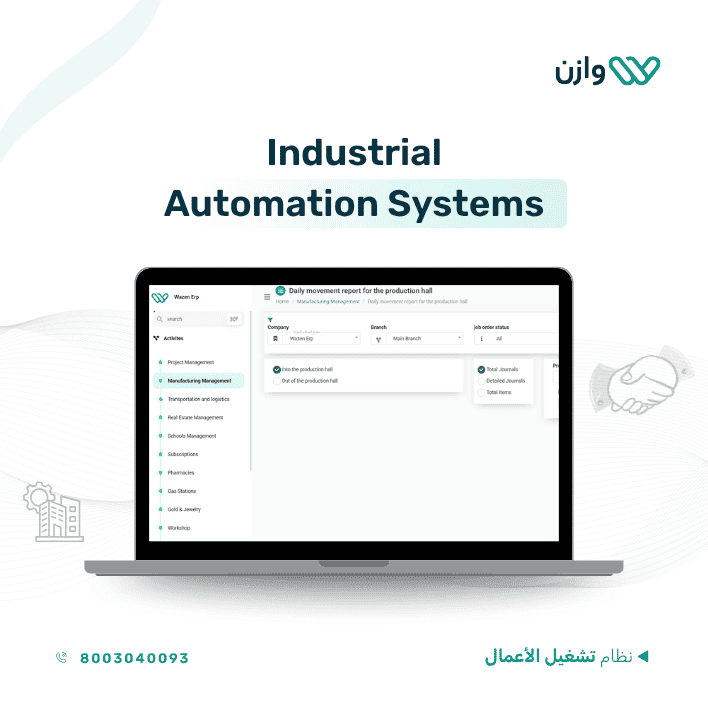
Today, industrial automation systems have become one of the most vital pillars of development in the production and manufacturing sector. Modern companies rely on advanced technologies to significantly improve efficiency, reduce costs, and raise product quality. With the rapid expansion of industrial digital transformation, automation has become an indispensable element in factories and production lines due to its ability to execute operations with high precision while minimizing human error.
Furthermore, it contributes to a qualitative leap in factory management by integrating smart systems, industrial robotics, and advanced controllers. This creates a more stable and effective production environment, accelerates the pace of work, and increases production capacity—granting companies a strong competitive edge in both local and global markets.
The Concept of Industrial Automation🔗
Industrial automation is one of the most significant modern concepts in the world of manufacturing. It refers to the use of intelligent systems and advanced technologies—such as robotics, control devices, and industrial software—to execute production processes partially or fully without direct human intervention.
Automation in manufacturing aims to raise operational efficiency within factories, enhance product quality, and reduce error rates and operational costs. The core idea is to transform traditional manual processes into precise digital operations controlled via programmed systems, ensuring continuous production with higher speed and greater accuracy. Its application also improves the work environment by reducing human risks and increasing reliance on technology to manage production lines, making it a fundamental element in developing the modern industrial sector.
Types of Industrial Automation🔗
Industrial automation varies according to the nature of the processes within a factory and the level of flexibility required. Each type differs in its use and its ability to adapt to changes in product volume or variety, making the selection of the appropriate type a key step in boosting performance.
The most important types include:
- Fixed Automation: Used in large-scale production lines that manufacture a single product repeatedly. The system is pre-programmed and cannot be easily changed. It is characterized by high productivity and low per-unit cost but lacks flexibility.
- Programmable Automation: Used for batch production where the system can be reprogrammed to manufacture different products. It suits factories producing medium volumes with variations in design or specifications, offering more flexibility than fixed automation.
- Flexible Automation: One of the most advanced types within industrial automation systems, allowing for rapid changes in production lines without long downtimes. This makes it ideal for factories dealing with multiple and constantly changing products.
- Production Line Automation: A primary application that integrates smart systems, robots, and controllers into the production chain to increase speed, reduce human error, and continuously improve the quality of the final product.
- Integrated Automation: Relies on linking all production stages—from design to packaging—within a single integrated system, achieving maximum efficiency and reducing the waste of time and resources.
Objectives of Industrial Automation🔗
Industrial automation is a major trend aimed at evolving manufacturing processes by merging smart technologies with operational workflows. Smart factory automation focuses on achieving the highest levels of efficiency and precision while significantly reducing resource waste.
The primary objectives include:
- Improving Production Efficiency and Quality: Automation helps raise product quality by relying on precise systems that operate according to fixed standards, ensuring stable production processes.
- Enhancing Production Speed: Industrial control systems significantly accelerate the production cycle by executing operations automatically and organized, leading to increased capacity.
- Reducing Human Intervention: A key goal of factory automation is to limit reliance on the human element in sensitive or repetitive tasks, which enhances safety and minimizes errors.
- Raising the Efficiency of Industrial Control Systems: Modern factories rely on these systems to manage production lines with high precision, monitoring operations and optimizing performance continuously.
- Developing Industrial Automation Software: Software plays a vital role in managing and operating smart systems, providing full control over production and data analysis.
- Reducing Operational Costs and Increasing Profitability: By minimizing waste and optimizing resource consumption, automation lowers long-term operational costs and boosts profitability.
Industrial Automation Software🔗
Industrial automation software is the "brain" behind modern manufacturing systems. It manages production processes with high precision and advanced efficiency. This process relies heavily on software to organize work, improve performance, and ensure uninterrupted production.
These programs transform traditional processes within factory automation into integrated digital operations. They allow for smart control through advanced interfaces that monitor every production stage. Furthermore, they play a crucial role in analyzing operational data and detecting errors early, which helps raise final product quality and reduce waste. By supporting automated control, these programs guide machinery to operate based on pre-programmed commands, making them a central component of modern industrial evolution.
How Industrial Automation Reduces Operational Costs🔗
Industrial automation is a modern solution that factories rely on to lower expenses while improving efficiency. By using smart systems and automated machinery, factories can operate with limited human intervention, which directly impacts the bottom line.
Automation reduces costs by:
- Lowering Reliance on Manual Labor: It reduces the need for human workers in repetitive or high-precision tasks, lowering wage costs and human-related errors.
- Decreasing Raw Material Waste: High operational precision ensures that raw materials are used efficiently, minimizing loss.
- Reducing Breakdowns and Maintenance Costs: Automated systems monitor operations continuously, helping detect faults early and reducing unplanned downtime.
- Optimizing Energy Consumption: Automation helps regulate energy use across production lines, lowering electricity and utility bills.
- Maximizing Time Efficiency: By improving speed and accuracy, automation increases output in less time, reducing the cost per production unit.
Key Technologies in Modern Industrial Automation🔗
Modern industrial automation systems rely on a suite of sophisticated technologies that have transformed factory management:
- Industrial Robots: Used for repetitive and precise tasks like assembly, welding, and packaging.
- Programmable Logic Controllers (PLC): The most critical technology in manufacturing automation, controlling machines and production lines based on specific programs.
- Distributed Control Systems (DCS): Used for managing large, complex industrial processes by distributing control across multiple units.
- Industrial Internet of Things (IIoT): Connects devices and equipment via the internet, allowing for real-time data collection and analysis.
- Artificial Intelligence (AI) and Machine Learning: Analyzes industrial data to predict failures and intelligently optimize production processes.
- Automation Management Software: Used to monitor and operate industrial systems, improving coordination between different manufacturing stages.
Wazen’s Role in Developing Industrial Automation🔗
Wazen contributes to enhancing the efficiency of modern factories by providing advanced technical solutions that support the transition toward industrial automation, raising the quality of production processes across various sectors.
- Promoting the Concept of Industrial Automation: Wazen provides integrated systems that help factories adopt automation, reducing reliance on manual operations.
- Supporting Automated Control in Manufacturing: The company offers smart solutions for precise management and real-time monitoring of production processes.
- Developing Production Line Automation: Wazen enhances efficiency by linking different operational stages within a single system, accelerating the workflow.
- Improving Operational Efficiency: Wazen's solutions optimize resource use, leading to reduced waste and increased productivity.
- Raising Accuracy and Reducing Errors: Through its smart systems, human errors are significantly minimized, ensuring stability and precision in industrial results.
Conclusion: Today, industrial automation is the cornerstone of the modern industrial sector. It has directly contributed to a qualitative shift in production and management methods, becoming an indispensable element for achieving operational efficiency, raising product quality, and optimizing resource utilization.
Frequently Asked Questions (FAQ)🔗
What is the Industrial Automation specialization?🔗
Industrial automation is a modern engineering field focused on the design, operation, and development of smart systems within factories to control production processes automatically and precisely. It combines electrical engineering, mechanical engineering, and computer science to manage production lines and develop control systems that increase operational efficiency.
Is there a future for Industrial Automation?🔗
Yes, the future of industrial automation is one of the most promising fields globally, especially with the expansion of industrial digital transformation. It has become an essential element in production development, contributing to quality improvement, faster operations, and lower costs. The continuous evolution of AI and the Internet of Things (IoT) further strengthens this field, making it vital for the industrial future.
احجز عرض توضيحي الآن!
تعرّف أكثر على حلول وازن ERP المتكاملة لتشغيل الأعمال، واكتشف مستقبل الحوكمة الرقمية
معتمد من هيئة الزكاة والضريبة والجمارك
معتمد كمزود خدمة تخطيط موارد المؤسسات "لمصانع المستقبل"
دعم فني في استيراد بيانات نظامك السابق
قابل للربط والتخصيص والتكامل
معتمد من هيئة الزكاة والضريبة والجمارك
معتمد كمزود خدمة تخطيط موارد المؤسسات "لمصانع المستقبل"
دعم فني في استيراد بيانات نظامك السابق
قابل للربط والتخصيص والتكامل
معتمد من هيئة الزكاة والضريبة والجمارك
معتمد كمزود خدمة تخطيط موارد المؤسسات "لمصانع المستقبل"
دعم فني في استيراد بيانات نظامك السابق
قابل للربط والتخصيص والتكامل
معتمد من هيئة الزكاة والضريبة والجمارك
معتمد كمزود خدمة تخطيط موارد المؤسسات "لمصانع المستقبل"
دعم فني في استيراد بيانات نظامك السابق
قابل للربط والتخصيص والتكامل
Related Posts
- Read
Steps to Register for the Future Factories Initiative
The steps to register for the Future Factories Initiative represent the primary gateway for factories seeking to benefit from support and de
- Read
The Difference Between Manufacturing and Production
The difference between manufacturing and production is a fundamental concept in industry and operations management. Many business owners oft
- Read
Smart Factories Guide for Modern Manufacturing
Smart factories have become the cornerstone of the future of the industrial sector, as they rely on advanced digital technologies to connect
- Read
What is Supply Chain and Logistics Management? A Complete Guide for Businesses
How can factories and companies avoid financial and tax penalties? This has become a fundamental question in light of the constant changes i