Top Industrial Development Strategies to Scale Your Manufacturing Business
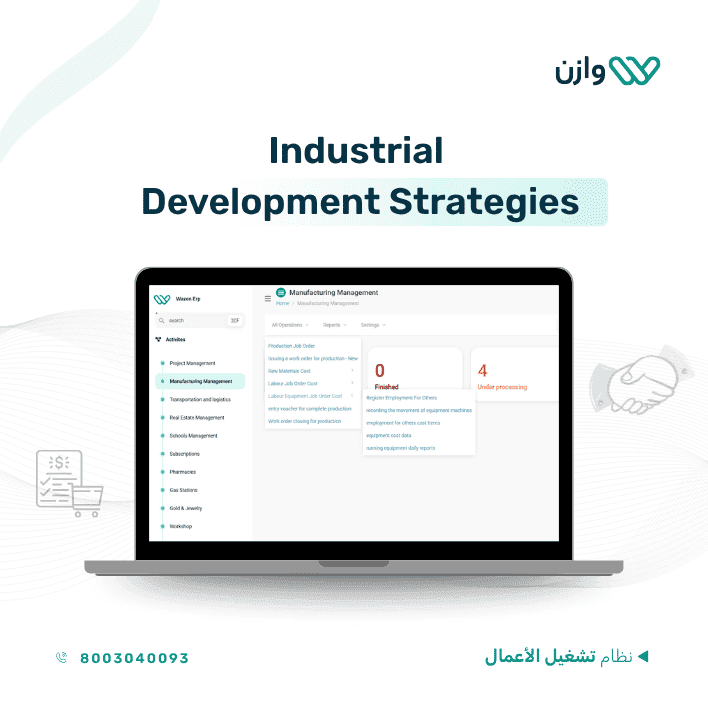
Today, industrial development strategies have become an integral part of any genuine attempt to advance factories and enhance their performance, especially in light of the rapid changes witnessing the industrial sector. The matter is no longer limited to merely increasing production; the primary focus has shifted toward how to produce with higher quality and lower costs while maintaining the ability to adapt to ever-evolving market requirements. Consequently, many organizations are turning to developing their operational methods, adopting modern technologies, and reorganizing their resources more efficiently to ensure their continuity and steady competition in an environment that knows no pause.
Industrial Development Strategies🔗
Industrial development strategies rely on a set of well-studied plans aimed at improving the efficiency of production processes, raising product quality, and achieving a true balance between economic growth and resource conservation. With the acceleration of changes in global markets, it has become essential for factories to adopt a more flexible approach based on innovation and continuous modernization, rather than sufficing with traditional methods.
In this context, the importance of merging modern technology with smart resource management emerges, contributing to waste reduction and significantly increasing productivity. Furthermore, manufacturing growth strategies are not limited to improving internal performance; they extend to building an integrated ecosystem that supports industrial sustainability by reducing emissions, rationalizing energy consumption, and using environmentally friendly materials. This trend not only enhances the organization’s image before customers but also grants it a greater capacity to persist in a market increasingly moving toward environmental responsibility. Therefore, adopting these strategies is no longer an optional step but a fundamental requirement for any facility seeking real and sustainable growth.
Developing Factory Performance and Its Role in Raising Operational and Production Efficiency🔗
Improving factory performance is a vital step for any facility striving to enhance operational efficiency and raise productivity levels sustainably. This process involves more than just updating equipment; it encompasses reorganizing internal processes and improving management methods. This effort falls within a comprehensive framework of industrial development strategies aimed at maximizing the utilization of available resources and bolstering market competitiveness.
Moreover, innovation in manufacturing has become a central element in supporting this development by introducing modern solutions and techniques that elevate performance quality and reduce waste. Here are the most prominent aspects illustrating the role of developing factory performance:
- Improving production line efficiency by reorganizing processes and reducing unnecessary downtime.
- Raising product quality by implementing precise control methods and advanced manufacturing standards.
- Reducing raw material and energy waste, which translates to lower operational costs.
- Enhancing production speed without affecting the quality of the final product.
- Supporting the reliance on innovation in manufacturing to introduce modern technologies that increase work precision and efficiency.
- Achieving integration with industrial development strategies to ensure continuous improvement and progress.
Innovation in Manufacturing and Its Impact on Keeping Pace with Technological Developments🔗
Innovation in manufacturing is a decisive factor in developing the industrial sector. It helps factories adapt to technological acceleration and achieve higher levels of efficiency and quality, particularly amidst increasing competition and the market’s heavy reliance on smart solutions and modern techniques.
Below are the most prominent roles of innovation in supporting the improvement of industrial production and enhancing alignment with industrial innovation strategies:
- Introducing modern technologies into production lines, such as automation and artificial intelligence, which increases the speed and accuracy of manufacturing processes.
- Improving industrial production by reducing human error rates and increasing reliance on smart monitoring and control systems.
- Developing product quality through advanced manufacturing methods that ensure consistent specifications and reduced defects.
- Raising the efficiency of resource consumption, such as energy and raw materials, leading to a clear reduction in waste.
- Supporting industrial development strategies by providing flexible solutions that help factories adapt to rapid market shifts.
- Enhancing the competitive edge of factories by offering innovative products that meet the renewed needs of customers.
- Accelerating production processes and improving operational flow within the factory to be more streamlined and organized.
- Opening the way for full digital transformation in the industrial sector to keep pace with future requirements.
How Industrial Strategic Planning Contributes to Lowering Operational Costs🔗
Industrial strategic planning helps manage resources within factories more accurately and effectively. This is directly reflected in the reduction of unnecessary expenses and the improvement of operational efficiency, eventually leading to lower operational costs without impacting production quality. Industry transformation planning is a key component here, ensuring that every change aligns with long-term financial health.
The following are the most important ways in which industrial strategic planning contributes to cost reduction:
- A comprehensive analysis of production needs before starting operations to avoid resource waste.
- Improving supply chain management, which reduces transportation and excess storage costs.
- Minimizing sudden breakdowns by establishing precise preventive maintenance plans for equipment.
- Raising the efficiency of raw material usage to ensure minimal waste during manufacturing.
- Organizing production processes in a way that reduces lost time and increases productivity.
- Supporting investment decisions within the factory based on accurate data rather than random estimates.
- Achieving a balance between quality and cost through continuous monitoring of operational performance.
- Contributing to lower operational costs by optimizing the distribution of human and technical resources.
Comprehensive Industrial Development Strategies to Achieve Balance Between Quality and Cost🔗
Comprehensive industrial development strategies are based on building an integrated system within factories aimed at raising quality levels while maintaining an appropriate production cost. This ensures that one aspect is not sacrificed at the expense of the other; instead, a calculated balance is achieved to guarantee continuity and growth.
Key features of these strategies to achieve this balance include:
- Integrating modern technology into production lines to improve quality and reduce errors.
- Implementing strict control systems that ensure consistent quality across all manufacturing stages.
- Improving operational processes with the goal of reducing waste and achieving a continuous reduction in operational costs.
- Relying on industry transformation planning to define priorities and allocate resources efficiently.
- Developing workforce skills to raise performance levels and reduce operational error rates.
- Using data and smart analytics to make more accurate and effective production decisions.
- Achieving integration between quality and cost through periodic reviews of production processes.
- Supporting continuous improvement within the factory as part of industrial development strategies to ensure long-term competitiveness.
The Role of Innovation in Manufacturing in Supporting Industrial Sustainability and Enhancing Competitiveness🔗
Innovation in manufacturing contributes directly to developing production methods within factories. It enables the use of modern techniques and smart solutions that reduce resource consumption and increase operational efficiency, clearly supporting the concept of industrial sustainability and making production processes more stable in the long run.
Furthermore, adopting innovative manufacturing methods is not limited to quality improvement; it extends to enhancing the ability of factories to compete in local and global markets by providing highly efficient products at a calculated cost. In this context, industrial innovation strategies play a major role in integrating innovation within the production system. Factories are guided toward adopting advanced technologies such as automation, digital transformation, and high-efficiency energy management. This integration between innovation and continuous development contributes to building a flexible industrial environment capable of adapting to changes, thereby enhancing industrial sustainability and granting organizations a strong competitive advantage that ensures their continuity and growth in a rapidly changing market.
The Role of Wazen in Supporting Industrial Development Strategies and Enhancing Production Process Efficiency🔗
The Wazen system contributes to raising the efficiency of the industrial sector by providing integrated tools that help companies organize their operational processes with high precision. This is directly reflected in improving overall performance within factories. This role also supports the implementation of industrial development strategies by offering technical solutions that assist in production monitoring, resource management, and data analysis in a way that ensures more accurate and effective decision-making.
Key aspects of Wazen's role in supporting this direction include:
- Improving the management of production processes through a digital system that links all factory departments into a single framework.
- Supporting the application of industrial development strategies by providing accurate data that aids in planning and decision-making.
- Raising the efficiency of resource utilization and reducing raw material and energy waste.
- Enhancing oversight of operational performance to ensure higher quality across various production stages.
- Facilitating the tracking and analysis of operational costs in a way that contributes to improved profitability.
- Supporting digital transformation within factories to keep pace with modern industrial development requirements.
- Improving the speed of execution and reducing operational errors through automation and system integration.
- Providing a comprehensive vision that helps management develop more stable and effective future plans.
Industrial development strategies represent the true foundation for building a strong industrial sector capable of facing the accelerating challenges of modern markets. Success is no longer tied only to increasing production, but rather to the ability of organizations to improve quality, raise efficiency, and achieve a balance between cost and performance. With increasing reliance on modern technologies and precise planning, industrial development has become a necessity to ensure continuity and bolster competitiveness.
Frequently Asked Questions About Industrial Development Strategies🔗
1) What is meant by industrial development strategies?🔗
They are a set of plans and methods adopted by factories and industrial companies with the aim of improving operational performance, raising production quality, increasing operational efficiency, and achieving the ability to compete in local and global markets.
2) What are the most important goals of industrial development strategies?🔗
They aim to improve production efficiency, reduce waste, raise product quality, support innovation in manufacturing processes, and achieve a balance between cost and quality to ensure the sustainability of industrial growth.
3) How do industrial development strategies help improve production?🔗
They work on reorganizing processes within the factory, employing modern technology, and analyzing operational data, which contributes to increasing production speed, reducing errors, and improving the quality of the final product.
4) What is the relationship between industrial development strategies and industrial sustainability?🔗
They are directly linked, as these strategies focus on the optimal use of resources and the reduction of waste and emissions, which supports the concept of industrial sustainability and ensures the continuity of high-efficiency production over the long term.
احجز عرض توضيحي الآن!
تعرّف أكثر على حلول وازن ERP المتكاملة لتشغيل الأعمال، واكتشف مستقبل الحوكمة الرقمية
معتمد من هيئة الزكاة والضريبة والجمارك
معتمد كمزود خدمة تخطيط موارد المؤسسات "لمصانع المستقبل"
دعم فني في استيراد بيانات نظامك السابق
قابل للربط والتخصيص والتكامل
معتمد من هيئة الزكاة والضريبة والجمارك
معتمد كمزود خدمة تخطيط موارد المؤسسات "لمصانع المستقبل"
دعم فني في استيراد بيانات نظامك السابق
قابل للربط والتخصيص والتكامل
معتمد من هيئة الزكاة والضريبة والجمارك
معتمد كمزود خدمة تخطيط موارد المؤسسات "لمصانع المستقبل"
دعم فني في استيراد بيانات نظامك السابق
قابل للربط والتخصيص والتكامل
معتمد من هيئة الزكاة والضريبة والجمارك
معتمد كمزود خدمة تخطيط موارد المؤسسات "لمصانع المستقبل"
دعم فني في استيراد بيانات نظامك السابق
قابل للربط والتخصيص والتكامل
Related Posts
- Read
Steps to Register for the Future Factories Initiative
The steps to register for the Future Factories Initiative represent the primary gateway for factories seeking to benefit from support and de
- Read
The Difference Between Manufacturing and Production
The difference between manufacturing and production is a fundamental concept in industry and operations management. Many business owners oft
- Read
Smart Factories Guide for Modern Manufacturing
Smart factories have become the cornerstone of the future of the industrial sector, as they rely on advanced digital technologies to connect
- Read
What is Supply Chain and Logistics Management? A Complete Guide for Businesses
How can factories and companies avoid financial and tax penalties? This has become a fundamental question in light of the constant changes i