Sustainable Supply Chain Management: How to Build Eco-Friendly Operations
Sustainability in supply chains is no longer merely an additional option or a modern trend that can be ignored. Instead, it has become a fundamental element in the operations of companies striving for continuity and growth in a fast-paced competitive environment. The focus is no longer limited to the speed of supply or cost reduction alone; it has expanded to include how resources are managed in a way that balances operational efficiency, environmental protection, and ensuring long-term supply continuity.
What is the Meaning of Supply Chains?🔗
Supply chains represent the integrated system that encompasses all stages and processes associated with providing a product or service, starting from obtaining raw materials, through manufacturing, storage, and transportation processes, and finally delivering the end product to the customer.
This system also includes supplier management, inventory organization, and distribution with the aim of ensuring products arrive at the right time, with the highest possible quality, and at the lowest operational cost. The importance of this concept increases with the evolution of the modern business environment, where the goal is no longer just completing the supply process, but rather focusing on improving efficiency, reducing waste, and enhancing continuity. This is where the role of Sustainable Supply Chain Management emerges as a core component aiming to achieve a balance between economic efficiency and the preservation of environmental resources, helping companies build a smarter and more resilient supply system for the long term.
What is the Concept of Sustainable Supply Chain Management?🔗
The concept of Sustainable Supply Chain Management refers to the adoption of a set of practices and policies aimed at managing all stages of the supply chain in a way that balances economic efficiency, environmental protection, and social responsibility.
In other words, the matter is not limited to ensuring products and services arrive on time and at the lowest cost; it extends to minimizing the environmental impact resulting from operational processes, improving resource utilization, and supporting fair and sustainable practices across all parties involved in the chain. This concept relies on redesigning logistical and operational processes—such as transport, storage, and manufacturing—to be more efficient and less wasteful. This transition toward a sustainable supply chain contributes to enhancing transparency and improving product traceability while ensuring suppliers adhere to clear environmental and ethical standards.
Consequently, sustainability has become an essential strategic element for companies seeking long-term growth, as it helps them reduce costs, mitigate environmental risks, and build a strong corporate image based on responsibility and commitment toward society and the environment.
Importance of Sustainable Supply Chain Management🔗
Sustainability is gaining increasing importance today because it is no longer an optional practice; it has become a strategic necessity that helps companies achieve a balance between economic growth and resource conservation. Furthermore, implementing green supply chain management contributes to raising the efficiency of operational processes and improving competitiveness in local and global markets. The importance of sustainability is manifested through several key aspects that directly affect corporate performance and continuity:
- Reducing Operational Costs: By optimizing resource use and reducing waste in production, transportation, and storage stages, which leads to a sustainable increase in profit margins.
- Mitigating Environmental Impact: Through the reduction of carbon emissions resulting from transportation and manufacturing, and by adopting eco-friendly logistics in supply chain management.
- Enhancing Logistical Efficiency: Through improved planning, inventory management, and the development of distribution systems that reduce delays and operational errors.
- Raising Transparency and Compliance: By tracking supply chain stages and ensuring supplier commitment to approved environmental and ethical standards.
- Reducing Operational Risks: By building resilient supply chains capable of adapting to crises and sudden market changes.
- Improving Brand Reputation: Sustainability reflects a company’s commitment to environmental and social responsibility, which bolsters the trust of customers and partners.
- Supporting Innovation: By adopting modern technologies such as digital transformation and Artificial Intelligence to improve operations and increase efficiency.
Elements of Sustainability in Supply Chains🔗
Sustainability relies on a group of core elements that ensure a balance between operational efficiency and the preservation of environmental and social resources. These elements work together to build a more efficient, flexible, and continuous supply system. Key elements include:
- Effective Resource Management: Through the optimal use of raw materials and energy and reducing waste in all stages of the supply chain to achieve higher efficiency and lower costs.
- Controlling Environmental Emissions: By reducing emissions from transportation and manufacturing and adopting transport methods that are less harmful to the environment.
- Responsible Sourcing: Relying on selecting suppliers who adhere to environmental and ethical standards, ensuring the long-term sustainability of operations.
- Efficient Inventory Management: To reduce surplus and waste and avoid unnecessary storage that leads to resource depletion.
- Transparency and Traceability: By monitoring all stages of the supply chain to ensure adherence to quality and sustainability standards.
- Improving Energy Efficiency: Through the use of modern technologies that reduce energy consumption in manufacturing, storage, and transportation.
Strategies for Improving Sustainable Supply Chain Management🔗
Companies seek to develop their sustainability performance through a set of practical strategies that help reduce environmental impact and improve operational efficiency. Key strategies include:
- Implementing Digital Transformation: Using smart systems to manage supply chains helps improve planning, reduce errors, and increase operational efficiency.
- Optimizing Transportation and Distribution Networks: By selecting more efficient routes and reducing unnecessary trips, which contributes to lowering emissions and costs.
- Using Renewable Energy: Utilizing renewable energy in production and storage processes to limit reliance on traditional energy sources and reduce the carbon footprint.
- Recycling and Reuse: Implementing recycling for materials and products within the supply chain to reduce waste and promote a circular economy.
- Developing Supplier Relationships: By imposing clear sustainability standards and ensuring all parties within the supply chain adhere to them.
- Continuous Process Improvement: By periodically evaluating performance, identifying weaknesses, and working on their development.
The Role of the Wazen System in Enhancing Sustainability and Operational Efficiency🔗
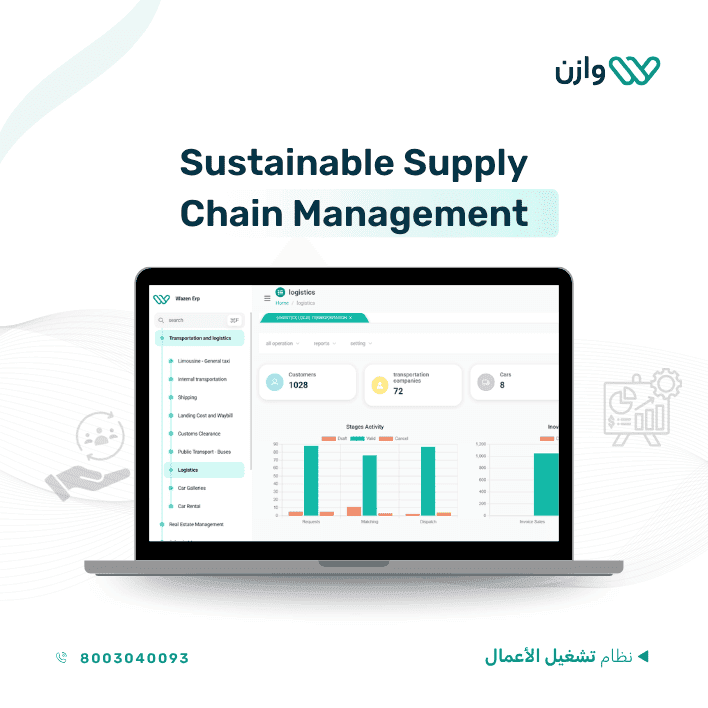
The Wazen system is one of the modern technical solutions that directly contribute to supporting Sustainable Supply Chain Management by improving the management of operational processes and linking all stages of the supply chain in an integrated digital system. The system helps raise efficiency, reduce waste, and enhance the ability to make accurate, data-driven decisions, which positively reflects on the overall performance of institutions and the sustainability of their resources.
Wazen's role in providing sustainable logistics solutions and enhancing operational efficiency is evident through several key aspects:
- Integrated Supply Chain Management: By linking procurement, inventory, and distribution processes in a single system, reducing errors and increasing operational efficiency.
- Reducing Resource Waste: Through high-precision inventory tracking and preventing unnecessary accumulation or shortages.
- Improving Operational Planning: By providing accurate data and analytics that assist in demand forecasting and optimizing supply and production decisions.
- Supporting Digital Transformation: By automating manual processes and reducing reliance on traditional procedures that consume time and resources.
- Improving Transparency and Oversight: Making it easier to track operations and ensure commitment to operational and environmental standards across all supply chain stages.
- Reducing Operational Costs: Through the optimization of resource use and the reduction of operational errors that might lead to financial or environmental losses.
- Enhancing Environmental Sustainability: By improving process efficiency and reducing waste and emissions resulting from poorly managed supply chains.
Sustainable Supply Chain Management has become an essential element today that cannot be ignored when discussing business development and operational efficiency. It represents the foundation upon which companies rely to achieve a balance between economic growth and environmental preservation. With rapid technical evolution, adopting smart solutions and integrated management has become a necessity to ensure continuous performance and achieve the highest levels of efficiency.
Frequently Asked Questions🔗
What are sustainable supply chains?🔗
A sustainable supply chain is an integrated system of processes aimed at managing the flow of materials, products, and services from suppliers to consumers in a way that balances economic efficiency, environmental preservation, and social responsibility. It does not focus solely on cost reduction or supply speed, but also aims to minimize environmental impact and promote ethical practices.
What are the three elements of sustainability?🔗
Sustainability is based on three main pillars known as the "Triple Bottom Line," which represent the framework used by institutions to apply sustainable policies:
- Environmental Dimension: Concerned with protecting the environment, reducing pollution and emissions, and the rational use of natural resources and energy.
- Economic Dimension: Focuses on achieving sustainable financial growth by improving operational efficiency, reducing costs, and increasing productivity.
- Social Dimension: Concerned with improving the quality of individuals' lives, ensuring fairness in the work environment, and enhancing corporate social responsibility toward the community.
What are some examples of sustainability?🔗
There are numerous applications of sustainability in practice across various sectors like industry, transport, and energy:
- Using Renewable Energy: Such as solar and wind energy instead of fossil fuels to power factories and buildings.
- Recycling: For materials like paper, plastic, and metals to reduce waste and preserve natural resources.
- Sustainable Transportation: Using low-emission transport like electric vehicles or optimizing logistical route planning to create eco-friendly logistics.
- Efficient Inventory Management: Within supply chains to reduce waste and damaged products.
- Adopting Smart Digital Systems: That help optimize processes and reduce reliance on traditional paper-based procedures.
احجز عرض توضيحي الآن!
تعرّف أكثر على حلول وازن ERP المتكاملة لتشغيل الأعمال، واكتشف مستقبل الحوكمة الرقمية
معتمد من هيئة الزكاة والضريبة والجمارك
معتمد كمزود خدمة تخطيط موارد المؤسسات "لمصانع المستقبل"
دعم فني في استيراد بيانات نظامك السابق
قابل للربط والتخصيص والتكامل
معتمد من هيئة الزكاة والضريبة والجمارك
معتمد كمزود خدمة تخطيط موارد المؤسسات "لمصانع المستقبل"
دعم فني في استيراد بيانات نظامك السابق
قابل للربط والتخصيص والتكامل
معتمد من هيئة الزكاة والضريبة والجمارك
معتمد كمزود خدمة تخطيط موارد المؤسسات "لمصانع المستقبل"
دعم فني في استيراد بيانات نظامك السابق
قابل للربط والتخصيص والتكامل
معتمد من هيئة الزكاة والضريبة والجمارك
معتمد كمزود خدمة تخطيط موارد المؤسسات "لمصانع المستقبل"
دعم فني في استيراد بيانات نظامك السابق
قابل للربط والتخصيص والتكامل
Related Posts
- Read
Steps to Register for the Future Factories Initiative
The steps to register for the Future Factories Initiative represent the primary gateway for factories seeking to benefit from support and de
- Read
The Difference Between Manufacturing and Production
The difference between manufacturing and production is a fundamental concept in industry and operations management. Many business owners oft
- Read
Smart Factories Guide for Modern Manufacturing
Smart factories have become the cornerstone of the future of the industrial sector, as they rely on advanced digital technologies to connect
- Read
What is Supply Chain and Logistics Management? A Complete Guide for Businesses
How can factories and companies avoid financial and tax penalties? This has become a fundamental question in light of the constant changes i