Educational Process Automation
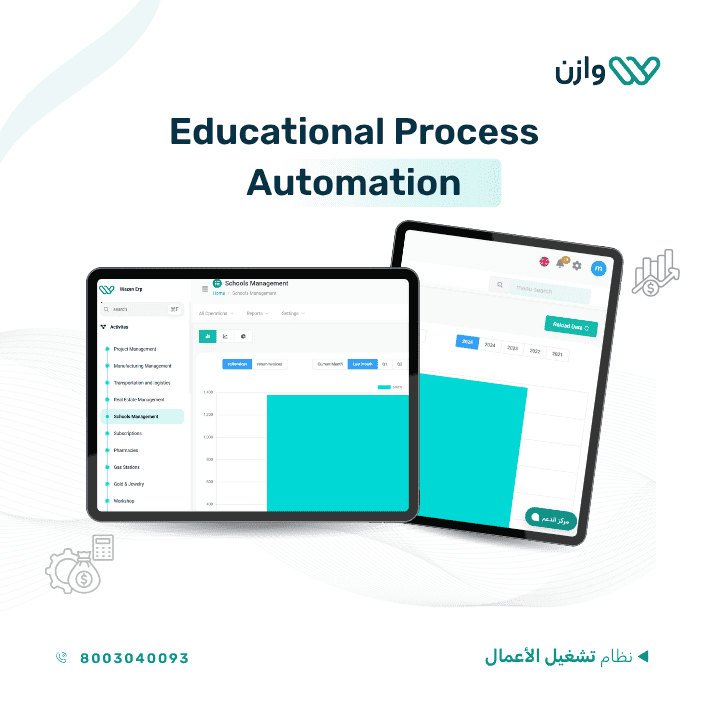
Educational Process Automation is no longer merely a technical option; it has become an urgent necessity for enhancing the efficiency of educational institutions and keeping pace with rapid digital transformation in education. By adopting smart systems, schools can manage student affairs, organize schedules, and monitor academic and administrative performance with unprecedented accuracy and speed. This automation contributes to reducing routine burdens, enhancing transparency, and improving the quality of educational outcomes, allowing schools to focus on developing the educational journey rather than being preoccupied with complex traditional procedures.
The Concept of Educational Process Automation🔗
Educational Process Automation refers to the use of digital systems and technologies to organize and manage educational and administrative tasks within institutions automatically and systematically, rather than relying on traditional manual methods. This shift aims to raise operational efficiency within schools and universities, facilitating data management such as student registration, attendance tracking, schedule preparation, and the issuance of academic reports with high precision. Furthermore, this process improves decision-making quality by providing accurate real-time information, which reflects positively on the institution's overall performance and enhances its comprehensive operational efficiency.
How Educational Process Automation Contributes to School Development🔗
Educational Process Automation brings about a qualitative leap within schools by transforming all administrative and educational procedures into integrated digital systems. This directly impacts performance quality, execution speed, and the accuracy of results within the learning environment through:
- Significantly Reducing Human Errors: Relying on precise automated systems for recording student data and managing daily operations ensures information reliability and ease of access at any time.
- Accelerating Admissions and Registration: Streamlining administrative procedures and reducing the need for paperwork saves time and effort for both students and administration.
- Optimizing Schedule Management: Smart systems organize and balance class distributions, ensuring the best possible utilization of human resources within the school.
- Providing Accurate Analytical Reports: Instant reports help school management make decisions based on real data regarding student and teacher performance and academic achievement levels.
- Enhancing Real-Time Attendance Tracking: Electronic tracking allows administration and parents to monitor student regularity with high accuracy and transparency.
- Improving Communication Efficiency: Instant notifications and continuous updates keep parents informed about their children's progress and academic behavior.
- Reducing Routine Burdens: Decreasing the administrative workload on teaching and administrative staff allows them to focus more on developing the core educational process.
- Improving the Overall Environment: Organizing internal operations leads to increased discipline and transparency across the school.
Components of Education Automation Systems🔗
The success of Educational Process Automation within institutions relies on a set of core components that work together seamlessly to facilitate management and improve performance. These education automation systems provide an advanced digital environment supporting all academic and administrative aspects.
These components include:
- Student Information System (SIS): Dedicated to recording student data, tracking academic files, and managing admissions and registration accurately.
- Attendance Management System: Automatically records the attendance of students and teachers, reducing errors and allowing for immediate disciplinary follow-up.
- Scheduling System: Assists in preparing schedules and distributing classes intelligently to ensure optimal use of human resources and facilities.
- Grading and Assessment System: Enables precise entry and monitoring of grades while issuing detailed academic reports on student achievement.
- Parental Communication System: Provides direct channels such as notifications and messages to continuously monitor student performance.
- Reporting and Analytics System: Offers accurate data and statistics that help management make strategic decisions based on factual information.
- School Resource Management: Contributes to the efficient organization and use of classrooms, laboratories, and various facilities.
- Electronic Archiving System: Digitally preserves all records and files, ensuring easy access and protecting data from loss or damage.
The Role of Automation in Enhancing Parental Communication🔗
Educational Process Automation plays a pivotal role in building an effective and sustainable communication channel between schools and parents. Modern systems allow for an immediate and accurate flow of information, which enhances transparency and facilitates continuous follow-up without delay.
- Providing instant notifications regarding student attendance, helping parents monitor daily regularity.
- Sending periodic reports on academic achievement and grades, giving parents a clear picture of performance.
- Facilitating direct communication between teachers and parents through integrated electronic platforms.
- Alerting parents in case of negative behaviors or a decline in academic levels to take early corrective action.
- Enabling parents to monitor homework and school activities through automated learning processes that track progress in real-time.
- Bridging the gap between school and home by providing constantly updated information without the need for physical visits.
- Supporting joint educational decisions between the school and the family based on up-to-date data.
- Increasing trust between parents and the school through transparency and easy access to information.
The Role of Integrated Systems Like Wazen in Educational Process Automation🔗
Integrated systems like Wazen are among the most prominent modern solutions supporting Educational Process Automation. They provide a comprehensive digital environment that brings together various administrative and academic aspects into a single platform, significantly improving management quality.
- Unifying Operations: Consolidating all school processes—including admissions, attendance, grades, and schedules—into one system reduces administrative fragmentation.
- Accelerating Daily Procedures: Automating routine tasks saves significant time for focusing on educational development.
- Comprehensive Reporting: Providing detailed analytical reports helps management monitor performance and make reliable decisions.
- Strengthening Communication: Connecting all parties—administration, teachers, and parents—via direct and user-friendly digital channels.
- Increasing Transparency: Making real-time, updated data available to all authorized users within the institution.
- Improving Data Integrity: Reducing human errors caused by manual entry, which enhances the accuracy of information.
- Supporting Continuous Development: Providing tools to analyze performance and monitor success indicators periodically.
- User-Friendly Experience: Offering a flexible interface that accelerates the process of digital transformation in education.
Educational Process Automation is one of the most vital pillars for modern educational institutions aiming for development and excellence. It is no longer just a supporting technology, but an integrated ecosystem that enhances work efficiency, data accuracy, and decision-making speed, while strengthening the connection between all stakeholders in the educational journey.
Frequently Asked Questions🔗
What is meant by Process Automation?🔗
Process automation refers to the use of systems and digital technologies to execute and manage various tasks automatically, either without direct human intervention or by reducing it to a minimum. The goal of this automation is to accelerate work completion, improve accuracy, and reduce errors, in addition to raising overall performance efficiency within institutions across various administrative or operational sectors.
What is the concept of automation in education?🔗
Automation in education means employing smart systems and digital technologies to manage educational and administrative processes within schools and universities. This includes student registration, attendance tracking, grade management, and the organization of study schedules in an electronic and systematic manner. This concept helps improve the quality of the educational journey, facilitates communication between teachers, students, and parents, and supports decision-making based on accurate, real-time data, thereby enhancing the educational environment as a whole.
احجز عرض توضيحي الآن!
تعرّف أكثر على حلول وازن ERP المتكاملة لتشغيل الأعمال، واكتشف مستقبل الحوكمة الرقمية
معتمد من هيئة الزكاة والضريبة والجمارك
معتمد كمزود خدمة تخطيط موارد المؤسسات "لمصانع المستقبل"
دعم فني في استيراد بيانات نظامك السابق
قابل للربط والتخصيص والتكامل
معتمد من هيئة الزكاة والضريبة والجمارك
معتمد كمزود خدمة تخطيط موارد المؤسسات "لمصانع المستقبل"
دعم فني في استيراد بيانات نظامك السابق
قابل للربط والتخصيص والتكامل
معتمد من هيئة الزكاة والضريبة والجمارك
معتمد كمزود خدمة تخطيط موارد المؤسسات "لمصانع المستقبل"
دعم فني في استيراد بيانات نظامك السابق
قابل للربط والتخصيص والتكامل
معتمد من هيئة الزكاة والضريبة والجمارك
معتمد كمزود خدمة تخطيط موارد المؤسسات "لمصانع المستقبل"
دعم فني في استيراد بيانات نظامك السابق
قابل للربط والتخصيص والتكامل
Related Posts
- Read
Types of Supply Chains Explained for Businesses
Types of supply chains are fundamental concepts in modern management, as models and systems vary depending on the nature of the business, co
- Read
Green Supply Chains for Sustainable Operations
Green supply chains are one of the most important modern trends helping companies achieve environmental sustainability while improving opera
- Read
Elements of Operational Risk Governance Explained
Elements of Operational Risk Governance are a fundamental pillar for ensuring effective risk management within organizations. They help defi
- Read
Best ERP System for Factories | Complete Guide
The best ERP system for factories is the ideal model that business leaders seek to enhance operational performance and improve production ef